INTRODUCTION
Responsible labour practices and
social responsibility remain integral to
SAGT’s long-term business strategy
and sustainability agenda. As a key
contributor to the Port of Colombo’s
position as a regional transhipment
hub, SAGT recognises that sustainable
value creation depends not only
on infrastructure, equipment and
technology, but also on the strength,
wellbeing and commitment of its
people.
The maritime and logistics sector
continues to evolve rapidly in
response to changing trade flows,
digitalisation, customer expectations
and increasing operational complexity.
In this environment, SAGT’s approach
to labour practices is centred on
maintaining a capable, engaged
and future-ready workforce
supported by sound governance, fair
employment standards and a culture
of accountability. The Company
seeks to provide an environment
where individuals are respected,
developed and empowered to
contribute meaningfully to operational
performance and organisational
progress.
SAGT’s HR policies, including
the Employee Code of Conduct,
Whistleblowing Policy, and Anti-Sexual
Harassment Policy, as well as its Health
& Safety Policy provide a strong
framework to uphold an ethical and
responsible working environment.
Further, policy and procedures such
as the Supplier Code of Conduct and
Supplier Portal ensure that these
ethics are permeated throughout the
Company’s value chain.
SAGT Human Resource Management
practices are aligned with International
Labour Organisation (ILO) standards,
ensuring adherence to global
standards. SAGT strictly adheres to Sri
Lankan laws and regulations pertaining
to Human Rights and Occupational
Health & Safety, and upholds a zero
tolerance policy on Child Labour,
Forced and Compulsory Labour
and discrimination. The Company is
committed to promoting Freedom of
Association and non-discrimination
amongst its employees, workforce
and value chain partners. SAGT
continuously monitors its workforce
and value chain to ensure that non
discrimination and instances of forced
labour and child labour do not occur.
Further, all new suppliers to the
organisation are subject to a supplier
social assessment at the point of
registering on SAGT’s supplier portal.
The Company communicates all
relevant and new initiatives and
policies to employees through the
Company’s routine team briefings,
toolbox meetings, union meetings,
emails and public announcements on
the notice board.
The principle of collective bargaining is
supported at SAGT, and the Company
encouraging enters into Collective
Labour Agreements (CLA) with the
Trade Unions. This process creates a
strong foundation of communication
and transparency, through which
employee concerns can be raised
and addressed. Periodic surveys
conducted by an external third-party
global service providers are carried
out, ensuring employees can escalate
their concerns to the management.
The Company’s sustainability
management framework is
utilised to track critical incidents
related to forced labour and other
related human rights violations,
if any. These potential incidents
are tracked quarterly through
the relevant Key Sustainability
Performance Indicators based
on the identified material topics
aligned to the GRI Topic Standards.
Beyond the workplace,
SAGT recognises its broader
responsibility as a major employer
and facilitator of national trade. The
Company contributes to economic
development through employment
generation, skills enhancement,
efficient cargo connectivity
and responsible stakeholder
engagement. Employee family
support initiatives, community
investment programmes and
long-term partnerships further
reflect SAGT’s commitment to
creating shared value beyond
the boundaries of its terminal
operations.
Through these efforts, SAGT
continues to strengthen the human
and social foundations required for
sustainable growth.
By maintaining responsible labour
practices, supporting employee
wellbeing and contributing
positively to society, the Company
remains well positioned to support
the continued development of the
Port of Colombo while delivering
lasting value to employees,
customers, shareholders and the
wider community.
Employment Generation
(GRI 2-7, GRI 2-8)
SAGTs workforce is categorised
into permanent contract and
subcontracted employees. As of 31st
March 2026, SAGT’s total workforce
stood at 1,554.
Whilst all members of SAGT’s
workforce reside in Sri Lanka, due to
the 24-hour nature of the Company’s
operations, 83% of SAGT’s employees
work on a rostered full-time equivalent
shift basis. There were no part-time
or non-guaranteed hour employees
during the reporting period.
Total Workforce Composition
Employees on contract basis
4
Contractors and casual labour
881
Workforce by Gender
| Workforce by Gender |
2025/26 |
2024/25 |
| Male |
1,497 |
1,416 |
| Female |
57 |
52 |
| Total |
1,554 |
1,468 |
Workforce composition by
gender (2025/26)
Permanent Employees
| Employee Composition by Gender |
2025/26 |
2024/25 |
| Male |
623 |
625 |
| Female |
46 |
42 |
| Total Permanent Employees |
669 |
667 |
Employee Composition by Gender
(2025/26)
Employee Age Diversity
| Employee Age Diversity |
2025/26 |
2024/25 |
| Under 30 |
108 |
81 |
| Aged 30-50 |
457 |
433 |
| Over 50 |
101 |
122 |
| Total Employees |
666 |
636 |
Employee Composition by Age Diversity
(2025/26)
Workforce composition by
gender (2025/26)
Employee Composition by Gender
(2025/26)
Employee Composition by Age Diversity
(2025/26)
Contractors
SAGT engages outsourced and
subcontracted personnel who play an
important supporting role in terminal
operations. This workforce model
provides flexibility to respond to
operational peaks, vessel schedules
and specialised service requirements.
Outsourced workers support several
areas including:
- Lashing operations
- Engineering assistance
- Inter-terminal trucking
- Prime mover driving support
- Security services
- Cleaning operations
- Canteen services
- Waste management
- General logistics support services
| Contractors' Personnel |
2025/26 |
2024/25 |
| Male |
870 |
791 |
| Female |
11 |
10 |
| Total |
881 |
801 |
Employee Composition by Age Diversity
(2025/26)
Talent Management (401-1)
SAGT’s retention strategy is supported
by a structured performance
management framework that
encourages accountability, dialogue
and employee growth.
New Employee Hires
New employee hires provide an
indication of the Company’s ability
to attract talent required to support
current and future operational
needs. During the year under
review, recruitment continued to be
guided by principles of merit, equal
opportunity and role suitability.
Employment decisions are based
on competence, qualifications,
experience and alignment with
organisational values.
During FY 2025/26, SAGT recorded
a total of 56 new hires, compared
with 93 new hires in FY 2024/25.
| Total New Hires |
56 |
| Male |
79% |
| Female |
21% |
Employee Attrition and Workforce
Stability
Employee attrition provides useful
insight into workforce stability,
employee engagement and the
effectiveness of retention practices.
Attrition may arise for several
reasons, including retirement,
resignation, migration, career changes,
personal circumstances or health
considerations.
| Total number of employee turnover by age |
2025/26 |
2024/25 |
| Under 30 |
8 |
7 |
| Aged 30-50 |
24 |
29 |
| Over 50 |
4 |
6 |
During FY 2025/26, SAGT recorded lower turnover compared with the previous year,
indicating improved workforce
stability.
36
Total attritions for
2025/26
5%
Attrition rate for
2025/26
Attrition by age group
Benefits provided to full-time employees that are not provided to temporary
or
part-time employees (401-2)
The Company provides a range of benefits that extend beyond statutory requirements and are aligned with
employee
wellbeing priorities, market expectations and responsible employment practices. These benefits are
intended
to enhance
quality of life, provide financial security, encourage work-life balance and reinforce employee
commitment
across the
organisation.
| Benefits |
Full time employees |
Third party contractors |
| Statutory benefits as per Sri Lanka’s Employees’ Provident Fund Act and Employees’ Trust
Fund Act |
✓ |
✓ |
| Statutory benefits as per Sri Lanka’s Gratuity Fund Act |
✓ |
✓ |
| Personal Protective Equipment required for working at the SAGT site |
✓ |
✓ |
| Daily meals at a subsidised rate, onsite resting facilities and transportation within
the
Port of Colombo |
✓ |
✓ |
| Onsite medical care on site at the Company’s medical centre, including ambulance
facilities
if required |
✓ |
✓ |
| Mandatory health and safety trainings |
✓ |
✓ |
| Health checkups every two years |
✓ |
× |
| Life insurance and disability/ invalidity coverage |
✓ |
× |
| Equitable remuneration |
✓ |
× |
| Parental Leave (Maternity and Paternity), including flexible working hours for
breastfeeding
mothers |
✓ |
× |
| Distress loan and benefits provided to employee’s family in the event of an untimely
passing
of an employee. |
✓ |
× |
| Supporting the education of employee’s children |
✓ |
× |
| Crisis allowance to alleviate hardships due to Sri Lanka’s economic crisis |
✓ |
× |
| A weekend at a star class hotel funded for employees and their families to a nominal
limit
|
✓ |
× |
EMPLOYEE BENEFITS,
ENGAGEMENT AND WELFARE
SAGT continued to maintain a people
centred approach to employee
welfare, recognising that a motivated
and supported workforce is essential
to sustaining safe, efficient and
dependable terminal operations. In a
demanding operational environment
that requires round-the-clock
coordination, technical competence and
strong teamwork, employee wellbeing
remains closely linked to performance,
engagement and long-term workforce
stability. Accordingly, the Company’s
employee welfare framework is
designed to support employees not
only in the workplace, but also in their
family and personal lives.
Remuneration and Statutory Benefits
SAGT’s remuneration structure
remains above the national minimum
wage threshold and is guided by
principles of fairness, equity and merit.
Compensation is determined according
to role responsibilities, capability,
experience and performance, and is
administered without discrimination on
the basis of gender, age, race, ethnicity,
religion, nationality, physical ability,
political beliefs or other non-work
related factors.
In addition to salaries and wages,
the Company continues to meet
all statutory obligations relating
to employee benefits, including
contributions under the Employees’
Provident Fund (EPF) Act and
Employees’ Trust Fund (ETF) Act.
These schemes provide important long
term financial protection for employees.
The Company also maintains gratuity
provisions for eligible employees
completing more than five years of
service, in line with the Sri Lanka
Financial Reporting Standards (which
mirror International Financial Reporting
Standards-IFRS) and the Gratuity Act
No 12 of 1983. The gratuity payment
made at the end of the service period is
half the employees’ last drawn monthly
salary, multiplied by the number of
years the employee was in service.
These arrangements support financial
wellbeing across the employment
lifecycle and reflect SAGT’s
commitment to responsible workforce
management.
Workplace Support
SAGT continued to provide employees
with access to three meals while on
duty through the Company canteen
at nominal rates, close to no cost.
Snacks and beverages were also made
available during morning and evening
hours at highly subsidised rates.
Employees and Contractors also
benefit from onsite changing room
and rest area facilities, and internal
transportation support within the
Port of Colombo, contributing to
convenience and smoother daily
operations.
Family Assistance and Compassionate
Support
The Company continued to
demonstrate its commitment to
employees and their families through
welfare support during periods of
hardship. In the event of the untimely
death of an employee, SAGT provides
a one-time cash bursary to support
surviving family members.
Educational Support for Employees’ Children
SAGT maintained a strong focus on supporting the educational advancement
of employees’ families. During the reporting year, the Company continued
the annual distribution of school supplies, including school bags, books and
stationery. 678 packs of school supplies were provided to employees’ children for
the 2026 school year.
High-performing students were recognised through monthly bursaries awarded
to children achieving success in the Grade Five Scholarship Examination and
those entering State Universities. Career guidance programs were also conducted
for children who had completed their GCE Advanced Level examinations, helping
them make informed decisions regarding future studies and career pathways.
During the year 7 scholarships were provided to state university entrants. Further,
14 scholarships were awarded to students performing well at the fifth grade
scholarship exams.
These initiatives demonstrate a broader approach to employee welfare by
contributing to the long-term development of employees’ families and future
generations.
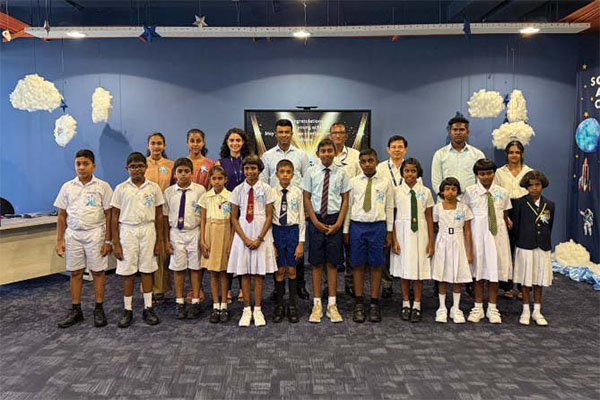
Recognizing academic excellence through scholarships awarded to high-performing students
in the Grade 5 Scholarship Examination and those entering State Universities.
Employee Engagement and
Organisational Culture
SAGT continued to invest in initiatives
that strengthen relationships,
encourage belonging and promote a
positive organisational culture. During
the year, the Company organised
its annual sports day at an external
venue, enabling employees and family
members to interact in a relaxed
setting outside the workplace.
Such events help build camaraderie
across departments, strengthen
teamwork and foster stronger
connections among employees who
may otherwise work in different shifts
or functions.
Employees and their families were
also offered an annual one-night hotel
stay at selected destinations. This
benefit recognises the importance
of rest, recreation and family time,
while demonstrating appreciation for
employee contribution in a meaningful
manner
In May 2025, SAGT organised a “Bakthi
Geetha” event with the participation of
employees and their family members.
The program served as a cultural
engagement platform that promoted
togetherness, wellbeing as well as
community spirit. By encouraging
participation in shared cultural
experiences, the Company continued
to nurture an inclusive and respectful
workplace culture.
Parental Leave (GRI 401-3)
SAGT recognises that supporting
employees through parenthood is
an important element of responsible
employment practice, gender
inclusion and workforce retention.
The Company therefore continued
to provide parental leave benefits in
line with statutory requirements while
promoting a supportive and family
friendly work environment.
Eligible female employees are granted
maternity leave of 84 working days
in accordance with Sri Lankan legal
requirements. This enables mothers
to recover from childbirth, care for
newborn children and manage the
transition into parenthood with
employment continuity.
Maternity leave
Female employees eligible for
maternity leave
100%
Paternity leave
Male employees eligible for
maternity leave
100%
To further support working mothers,
the Company provides flexible working
hours for breastfeeding purposes
upon return to work. This arrangement
helps employees balance professional
responsibilities with infant care needs
during the post-maternity transition
period.
SAGT also continued implementation
of its paternity leave policy introduced
in 2024. The policy enables new
fathers to participate more actively
in responsibilities associated with
the birth or adoption of a child.
The Paternity Leave policy which
goes above and beyond statutory
obligations entitles male employees to
21 days of paid leave within 12 months
of the birth or adoption of their baby.
By extending parental support beyond
maternity leave alone, the Company
acknowledges the evolving role of
fathers in caregiving and promotes
a more balanced sharing of family
responsibilities.
Through these initiatives, SAGT
continued to reinforce its position as
a responsible employer committed to
employee wellbeing, family support
and workforce engagement. The
Company’s approach reflects the
understanding that long-term business
success depends on employees who
feel valued, supported and empowered
to contribute at their best.
Training and Development
SAGT continued to recognise
employee capability development
as an important enabler of safe
operations, service quality and long
term competitiveness. As the maritime
and logistics sector evolves through
digitalisation, automation, changing
customer expectations and increasing
operational complexity, workforce skills
must continue to adapt accordingly.
The Company therefore remained
focused on strengthening technical
knowledge, behavioural competencies
and leadership capability across all
levels of the organisation.
Average hours of training per year
per employee (GRI 404-1)
Training needs are identified
based on performance appraisals,
employee feedback and supervisor
recommendation. As such there were
no fundamental changes in the process
of overall identification of training
needs during the period under review.
A 20% decline in total training
requirements has been recorded in
2025/26 in comparison to the previous
year. Further a 21% and 17% decline in
training hours has been recorded year
on year for male and female employees
respectively. In 2024/25 long term
trainings were identified and provided
for upskilling for both male and female
employees which has resulted in
the relative decline in training hours
provided in 2025/26.
| Employee Training Hours by gender |
2025/26 |
2024/25 |
% Change |
| Male |
19,727 |
24,862 |
-21% |
| Female |
2,679 |
3,236 |
-17% |
| Total |
22,405 |
28,098 |
-20% |
| Employee Training Hours by category |
2025/26 |
2024/25 |
% Change |
| Above Manager Grades |
367 |
646 |
-43% |
| Managers |
481 |
581 |
-17% |
| Assistant Managers |
1,255 |
1,508 |
-17% |
| Executives |
5,641 |
11,559 |
-51% |
| Non-executives |
11,984 |
13,805 |
-13% |
| Training Hours per Employee |
2025/26 |
2024/25 |
% Change |
| Male |
31 |
40 |
-21% |
| Female |
58 |
77 |
-24% |
| Total |
33 |
42 |
-21% |
| Average Training Hours per Employee by Category |
2025/26 |
2024/25 |
% Change |
| Above Manager Grades |
27 |
38 |
-30% |
| Managers |
63 |
53 |
19% |
| Assistant Managers |
63 |
72 |
-12% |
| Executives |
61 |
97 |
-37% |
| Non-executives |
24 |
28 |
-12% |
In addition to the full-time workforce,
the Company also provides numerous
training opportunities to interns, and
industrial trainees on a temporary
basis with 91 individuals provided such
an opportunity during the year under
review.
Programs for upgrading employee
skills and transition assistance
programs (GRI 404-2)
Training and development form a key
component of SAGT’s people strategy.
By investing in employee learning,
the Company seeks to enhance
operational effectiveness, reinforce
safety standards, support career
progression and prepare the workforce
for future business requirements. In
a specialised terminal environment,
continuous learning is particularly
important given the need for technical
competence, disciplined execution
and readiness to respond to changing
operational demands.
The diagram below outlines the
trainings provided to employees
throughout the reporting period.
Total Training Provided to Employees
SAGT continued the adoption of
organisation-wide LEAN management
principles under the guidance of
the APM Terminals Global LEAN
Academy. Training and development
of employees in LEAN is a key success
fact in successful adaptation. LEAN
level 1 training was conducted for all
employees during the period, with the
intention of continuing the LEAN level
2 program for selected employees in
the coming year. By aligning training
more closely with identified business
needs, SAGT continued to emphasise
quality, applicability and effectiveness
over training volume alone.
Percentage of employees receiving
regular performance and career
development reviews (GRI 404-3)
Objectives are established for all
employees at the executive level and
above, with performance reviewed
through both mid-year and year-end
appraisal cycles. The review process
includes self-assessment by employees
followed by supervisor evaluation,
enabling two-way discussion on
achievements, expectations and
development needs.
Employee performance is graded
on a scale of one to five, with results
reviewed by a cross-functional career
committee. This helps ensure that
career-related decisions are fair,
balanced and based on objective
criteria. The Company also uses a
digital performance management
system to improve efficiency,
transparency and consistency.
During the period, 100% of employees
in the executive and above categories
went through the annual performance
appraisal process.
The performance of contract personnel
working at SAGT is monitored
and managed by their respective
employers in accordance with their
contractual obligations.
Employee Diversity and Equal
Opportunity (GRI 405-1)
SAGT continues to identify diversity,
equity and inclusion as important
priorities within its people strategy.
While the ports industry has
traditionally faced barriers to female
participation, the Company has taken
deliberate steps to create a more
inclusive work environment.
The Company’s approach to diversity is
grounded in equal opportunity, merit
based employment and respect for
individual dignity. Employment-related
decisions, including recruitment,
remuneration, training, promotion
and performance evaluation, are
guided by objective criteria such as
competence, qualifications, experience
and potential. Personal characteristics
unrelated to job performance are not
considered in employment decisions.
Currently SAGT has one female in its
Senior Management Team (SMT) which
accounts to a female composition of
14%.
SAGT continued to maintain
zero tolerance for discrimination,
harassment or unfair treatment on
the basis of gender, race, ethnicity,
religion, nationality, age, marital
status, disability, political belief or
any other non-work-related factor.
This principle applies across all levels
of the organisation and throughout
the employee lifecycle. Through
these standards, the Company seeks
to create an environment where all
employees can perform confidently
and progress fairly.
The Company also ensures equal
remuneration for men and women in
similar job roles based on the number
of hours worked.
SAGT considers the annual total
compensation ratio of its highest paid
individual to the median compensation
levels to be confidential in nature.
Accelerating Inclusion: Advancing Women in Ports and Terminals
One of the Company’s key diversity priorities has been increasing female
representation in an industry where workforce participation by women has
traditionally remained low. During the reporting period, SAGT continued
to advance initiatives aimed at removing barriers to entry and broadening
access to employment opportunities.
In 2024, SAGT achieved a significant breakthrough by securing approval to
integrate women into select shift-based operational roles in the areas where
historically dominated by men and less accessible to female employees. As
a result, female representation rose from a previously stagnant 4% to 6%.
This milestone marks a deliberate and impactful step toward expanding
women’s participation in non-traditional functions. Building on this progress,
SAGT further strengthened female representation to 6.8% in FY 2025/26,
demonstrating continued commitment to gender inclusion across all levels of
operations.
Following approval to integrate women into selected shift-based operational
roles, SAGT has set a target of increasing female workforce representation
from 4% to 10% by 2029. This reflects the Company’s commitment to
broadening participation and strengthening the diversity of its talent
pipeline.
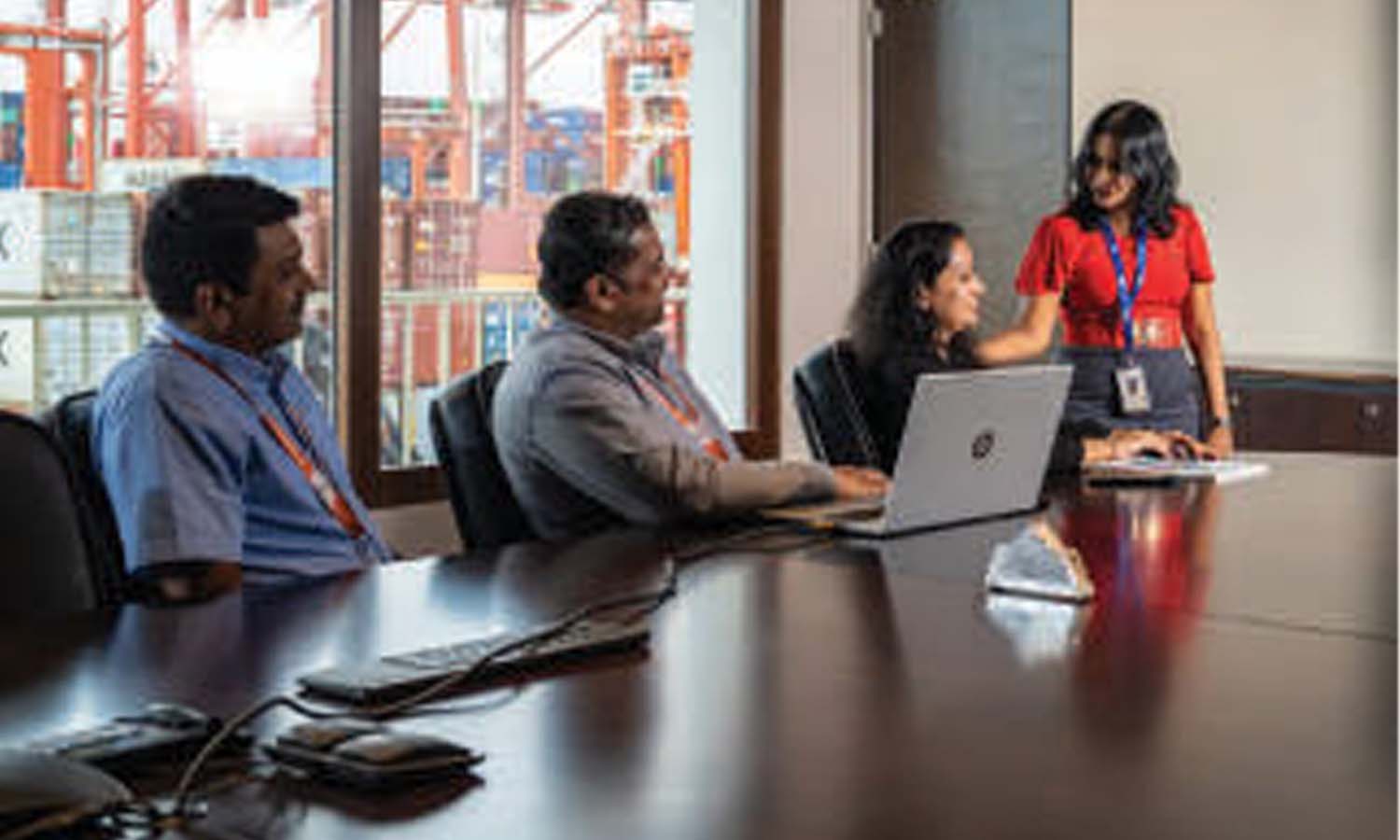
SAGT is committed to building an inclusive
workplace grounded in merit and equal
opportunity.
HUMAN RIGHTS, FAIR
EMPLOYMENT AND RESPONSIBLE
LABOUR PRACTICES
SAGT continued to uphold a workplace
culture founded on dignity, fairness,
mutual respect and responsible
employment practices during the
year under review. As a leading
participant in Sri Lanka’s maritime
and logistics sector, the Company
recognises that sustainable business
performance depends not only on
operational capability, but also on
maintaining ethical labour standards
and protecting the rights of all
people connected to its operations.
Accordingly, the Company remains
committed to providing a work
environment free from discrimination,
harassment, child labour, forced labour
and any form of unfair treatment.
The Company’s people policies are
aligned with applicable Sri Lankan
labour legislation, recognised
international labour principles and
internal standards of conduct. These
principles apply across all stages of
the employment lifecycle, including
recruitment, onboarding, performance
management, remuneration,
promotion, training, disciplinary
processes and separation. SAGT
also expects contractors, service
providers and other business partners
operating within the terminal to uphold
comparable standards of behaviour
and labour responsibility.
Incidents of discrimination and
corrective actions taken (GRI 406-1)
The Company maintains zero tolerance
for discrimination on the basis of
gender, age, race, ethnicity, nationality,
religion, marital status, political belief,
disability or any other protected
characteristic.
During the reporting period, no
incidents of discrimination requiring
formal external sanction or regulatory
action were reported. Any employee
concerns raised through internal
channels are subject to review in
line with established grievance and
disciplinary procedures. Where
necessary, corrective action is taken
promptly to maintain a respectful
workplace environment.
Regular communication, policy
awareness and leadership
accountability continue to reinforce
behavioural expectations across the
business. Through these measures,
SAGT seeks to ensure that all
employees are treated fairly and with
respect.
Operations and suppliers in which the
right to freedom of association and
collective bargaining may be at risk
(GRI 407-1)
SAGT recognises the importance of
employee voice, constructive dialogue
and the right of workers to organise
and participate in representative
structures in accordance with
applicable laws. The Company
continued to support a positive
industrial relations environment during
the reporting year, based on mutual
respect, transparency and good-faith
engagement.
Employees are free to engage
through recognised trade unions and
representative mechanisms. SAGT
encourages structured dialogue
through Collective Labour Agreements
and established communication
channels that allow workplace matters
to be discussed in an orderly and
constructive manner.
During the FY 2025/26, 74% of
employees were covered under
collective bargaining agreements,
reflecting strong workforce
representation and mature employee
relations practices.
There were no significant operational
changes during the reporting
period that materially restricted
freedom of association or collective
representation. Where organisational
changes arise, the Company remains
committed to timely communication
and engagement with affected
stakeholders. SAGT follows an
Open-Door policy, allowing Trade
Union representatives to approach
management with issues and
concerns, promoting a transparent
and accessible communication
environment. Additionally, the
Company has implemented a dispute
resolution procedure, designed to
address and resolve issues that may
not be covered in the CLA.
Employees and contractors are
encouraged to share their suggestions
with management through suggestion
boxes at toolbox meetings and during
monthly team briefings, ensuring that
all voices are heard and contributing to
a culture of continuous improvement.
Operations and suppliers at
significant risk for incidents of child
labour (GRI 408-1)
Operations and suppliers at
significant risk for incidents of forced
or compulsory labour (409-1)
SAGT maintains a strict zero-tolerance
approach to child labour across
all aspects of its operations. The
Company does not employ individuals
below the legal minimum working
age and requires robust verification of
age and identity during recruitment
processes.
All prospective employees are subject
to documented hiring procedures that
include review of official identification
records and supporting documentation
before employment is confirmed.
These controls are designed to prevent
underage employment and ensure
compliance with legal requirements.
The nature of SAGT’s operations
involves heavy equipment, industrial
traffic, lifting activity and technical
work environments that are
unsuitable for children and young
persons outside legally permitted
frameworks. Accordingly, strict
employment controls remain essential
to safeguarding vulnerable groups
and maintaining responsible labour
standards.
The Company also expects contractors
and labour suppliers to comply fully
with applicable employment laws,
including minimum age requirements.
Third-party personnel engaged within
the terminal are subject to onboarding
controls and site access requirements
intended to reinforce responsible
workforce practices.
During the year under review, no
incidents of child labour were
identified within SAGT’s direct
operations. No material cases involving
contractors or suppliers were reported
through available oversight channels.
SAGT continued to prohibit all forms
of forced or compulsory labour
within its operations. Employment
with the Company is entered into
voluntarily, with terms and conditions
communicated clearly to employees at
the commencement of employment.
Employees are free to resign subject
to applicable contractual notice
requirements and are not required
to lodge deposits, surrender identity
documents or accept coercive
employment conditions. Wages and
benefits are administered through
formal payroll systems, supporting
transparency and lawful remuneration
practices.
The Company’s recruitment processes
are structured to ensure that
employment relationships are based
on informed consent and documented
contractual terms. Working hours,
leave entitlements and statutory
benefits are governed by applicable
laws and internal policies.
SAGT also expects contractors,
outsourced labour providers and
service partners to uphold the
same standards. Where third-party
personnel operate onsite, the Company
requires compliance with relevant
labour, ethical and safety expectations
as a condition of engagement.
During the reporting period, no
incidents of forced or compulsory
labour were identified within direct
operations or reported through
contractor oversight mechanisms.
Grievance Handling and Ethical
Conduct
The Company recognises that strong
labour standards are supported by
accessible reporting mechanisms and
confidence in fair resolution processes.
Employees may raise workplace concerns through line management,
Human Resources, recognised
representatives or other designated
channels.
Matters relating to discrimination,
misconduct, unfair treatment or labour
concerns are reviewed in accordance
with established procedures, with due
regard for confidentiality, impartiality
and timely resolution. Where
substantiated issues arise, corrective
or disciplinary action is taken as
appropriate.
This framework supports early
intervention, helps prevent escalation
and reinforces a workplace culture
grounded in accountability and
respect.
Occupational Health and Safety
Occupational Health and Safety (OHS)
remained one of the most critical
priorities for South Asia Gateway
Terminals (SAGT) during the financial
year 2025/26. As a modern container
terminal operating within a high-risk
industrial environment, the Company’s
activities involve continuous vessel
operations, container handling,
engineering maintenance, heavy
mobile equipment, traffic movement
and contractor-based activities that
require rigorous safety discipline at
all times. SAGT therefore recognises
that strong safety performance is
fundamental not only to protecting
people, but also to sustaining
reliable operations, productivity and
stakeholder confidence.
The Company’s occupational health
and safety framework encompasses
two closely connected dimensions:
workplace safety and health, and
employee wellbeing. SAGT continues
to maintain a proactive safety
culture in which risk prevention,
hazard awareness, accountability
and continuous improvement are
embedded across the organisation.
The objective is to ensure that all
employees, contractors and visitors
return home safely each day while
enabling terminal operations to be
conducted efficiently and responsibly.
All stakeholders, including employees
and contractors, adhere to internally
developed Standard Operating
Procedures (SOPs) and precautionary
is designed to not only meet but
exceed the basic legal requirements,
ensuring the safety and well-being of
employees, contractors, and third
party visitors.
measures when entering terminal
premises. These procedures
emphasise proactive risk management,
continuous quality improvement, and
contingency planning, ensuring that
terminal operations are conducted
in alignment with the highest safety
standards.
Safety considerations are integrated
into operational planning, work
execution, supervision, contractor
management and employee training.
Rather than reacting only after
incidents occur, the Company focuses
on identifying risks early, implementing
controls and continuously
strengthening workplace conditions.
The Company continued to promote
shared responsibility for safety
across all levels of the organisation.
Employees and contractors are
expected to comply with procedures,
use personal protective equipment
correctly, report unsafe conditions and
intervene where hazards are observed.
All personnel are empowered to speak
up and stop work where conditions are
considered unsafe, reinforcing a culture
in which safety ownership exists at the
point of work.
From the point of recruitment,
employees are trained in safety
procedures and protocols. This
ongoing training ensures that
employees are well prepared for the
specific risks associated with their
roles and enhances the overall safety
culture.
Moreover, the Company views
occupational safety as an integral part
of its culture, and by embedding safety
into the Company’s ethos, it becomes
a shared responsibility, making safety
a continuous and natural consideration
in day-to-day operations.
Occupational Health and Safety
Management System (GRI 403-1)
Whilst Sri Lanka’s labour laws set
minimum requirements to ensure
worker safety, SAGT’s Occupational
Health and Safety Management
System (OHSMS) goes beyond these
regulatory standards to provide a
more robust and comprehensive
approach to health and safety. SAGT
has implemented a structured and
well-defined OHSMS framework that is designed to not only meet but
exceed the basic legal requirements,
ensuring the safety and well-being of
employees, contractors, and third
party visitors.
The comprehensive OHSMS is, further
reinforced by a Health & Safety Policy
and Standard Operating Procedures
(SOP’s) The Health & Safety Policy and
SOP’s are applicable to all employees,
contractors and all third parties visiting
SAGT, ensuring 100% coverage to
support the Company’s proactive
management of risks.
The HSE Department, led by senior
management, is responsible for
operationalising the system across
the terminal. Responsibilities include
monitoring compliance, reviewing
incidents, maintaining safety
documentation, coordinating training
and identifying areas requiring
improvement.
The department plays a key role
in ensuring that safety standards
are not only adhered to but also
continuously improved. The team is
also responsible for the identification
and rectification of any incidents or
cases of non-conformity with the
OHSMS. The OHSMS is audited by
internal and external parties who
review and determine its efficacy.
Additionally, training programmes are
reviewed to determine any potential
improvements/advancements.
A comprehensive contractor
management process ensures that
contractors adhere to the same
safety standards as SAGT permanent
staff. This process includes weekly
meetings and discussions with three
of the critical contractor groups. These
meetings provide an opportunity
to review best practices which are
followed by contractors, review
operating conditions to ensure that
working environment remain safe,
identify unsafe activities or behaviours
and to develop solutions to mitigate
these risks. This collaborative
approach not only strengthens the
overall safety culture but also helps
proactively address any safety
concerns before they lead to incidents.
During the year, SAGT continued
progressing its digital safety management strategy. Following
earlier phases of implementation, the
Digital Safety Management System
further strengthened the management
of risk assessments, incident
reporting, task tracking and access to
safety data. By consolidating safety
processes within a digital platform, the
Company improved efficiency, visibility
and responsiveness in the execution of
safety responsibilities.
The Company’s Occupational Safety
and Health Committee continued to
function as an important leadership
and consultation platform. Chaired
by the Chief Executive Officer and
supported by a cross-functional
membership, the Committee met
regularly during the year to review
performance, reinforce priorities and
support continuous improvement.
Hazard Identification, Risk
Assessment and Incident
Investigation (GRI 403-2)
SAGT continued to apply a formal
Hazard Identification and Risk
Assessment (HIRA) process to
identify workplace risks and ensure
that appropriate controls are in place
before work begins. Developed in
alignment with best practices followed
by A.P. Moller Terminals, a global
leader in terminal operations, this
grid plays a pivotal role in identifying
and mitigating potential risks in the
terminal environment. The HIRA grid
sets the tone for SAGT’s operations
by providing a structured approach to
assessing hazards and ensuring that
appropriate controls are in place to
prevent accidents and ensure worker
safety. The HIRA grid specifically
targets the “Fatal Five” risk categories
that are known to pose the most
significant safety threats in terminal
operations. These critical areas are
thoroughly assessed for risks and
continuously reviewed as part of the
application of the relevant Standard
Operating Procedures (SOPs). The
Fatal Five are:
- Transportation
- Suspended loads and lifting
- Working at heights
- Stored energy
- Control of contractors
These categories remain priority
focus areas due to their potential to
result in serious injury if not effectively
managed.
Daily toolbox meetings were
conducted before each shift,
particularly within operations and
engineering functions, to discuss
planned activities, site conditions,
potential hazards and mitigation
measures. These sessions help ensure
that employees and contractors begin
work with clear awareness of risks
relevant to the day’s activities.
During the year, the Company also
continued Safety Walks across high
risk areas of the terminal. Employees
are encouraged to identify unsafe
conditions or behaviours, with
observations escalated to relevant
departments for timely action.
Where incidents occur, SAGT follows
a structured investigation process.
Immediate investigations are initiated
to determine root causes, supported
by formal incident reports containing
details of the event, persons involved,
possible rule violations, photographs
and corrective actions. An Incident
Report (IR) is raised by the executive
on duty after each incident. An IR must
include detailed information such as
a description of the incident, the list
of people involved, possible violations
of safety rules and procedures
that may have led to the incident,
corrective action and photographs of
the incident. The IR is then circulated
amongst all managers of the Company
within 24 hours of the incident taking
place. Serious incidents trigger more
comprehensive reviews and audits of
associated procedures and controls.
STANDARD OPERATING
PROCEDURES, RISK ASSESSMENTS
AND LOTO PROCEDURE
A standard operating procedure
(SOP) and Risk Assessment (RA) is
mandatory for all activities that are
conducted within the terminal. The
SOPs and RAs are conducted by
the relevant departmental functions
under the guidance of the HSE
Team. The Company also continues
to adhere to its “Lock Our Tag Out”
(LOTO) procedure which involves a
colour coded tagging system for all
malfunctioning equipment in order to
prevent the uninformed use of such
equipment that could cause injury.
Furthermore, materials storage and
hoarding areas are high risk areas
and require a safety data sheet to be
displayed.
Use of Personal Protective Equipment
SAGT enforces a rigorous Personal
Protective Equipment (PPE) policy
to ensure the safety of all personnel
and visitors in high-risk areas. The
PPE includes safety shoes, hard-hats
and a high visibility jacket; which is
mandatory for all who enter high risk
areas within the terminal. Reminder to
wear the required PPE are displayed
prominently at key points of entry to
the terminal premises. Depending on
the work and area of the terminal that
is being accessed, the Company may
also mandate other PPE accessories
such as gloves, goggles and mufflers.
It is noteworthy that all PPE used
by SAGT is certified as meeting
international standards. Additionally,
all visitors entering the terminal are
required to watch a safety induction
video and sign a safety induction
sheet confirming that he or she has
understood the safety requirements for
entering the terminal, following which
a safety card is issued to the visitor to
be used for the duration of the stay.
Safety Enhancements and Operational
Risk Reduction
SAGT continued to invest in practical
initiatives that strengthen workplace
safety and reduce operational risk.
During the year, the Company
commenced installation of a fatigue
monitoring system on yard cabs.
The system monitors driver alertness
indicators and issues warnings where
signs of fatigue are detected. This
initiative is intended to enhance
the safety of drivers, surrounding
personnel and equipment, particularly
within shift-based operations involving
mobile machinery.
Halo lights were introduced on forklifts and reach stackers to project visible
warning zones around equipment. These lights improve awareness for
pedestrians and operators and support safer movement in busy operating areas.
A lockout switch was installed for ship-to-shore gantry crane spreader checks,
ensuring that spreaders cannot be operated while inspections are in progress.
This additional engineering control significantly reduces exposure to serious
injury during maintenance activities.
Additional buses were introduced within the wharf and yard to eliminate
routine walking by personnel in high-risk operating zones. This initiative reduces
pedestrian exposure to vehicle movement and suspended load areas.
Stand-by drivers were also introduced for engineering teams, enabling safer and
faster attendance to equipment breakdowns or urgent maintenance tasks.
Continuous Improvement Through
Safety Innovation
SAGT continued to integrate safety
into its lean management culture
through practical improvement
initiatives.
During the year, the Company
onboarded SQDC (Safety, Quality,
Delivery, Cost) visual management
systems into daily operations. Through
team huddle boards, daily performance
is monitored against targets, with
specific safety indicators focused on
stevedoring activity, man-machine
interaction and contractor control. This
real-time approach encourages prompt
problem-solving and ownership at
team level.
Several “Just Do It” Kaizen initiatives
were also implemented to strengthen
safety and efficiency through simple
frontline-led improvements. Examples
included:
- Applying luminous paint to Rubber
Tyred Gantry ladders to improve
night visibility
- Introducing an improved mooring
pull mechanism with auto release
functionality
- Replacing forklift-based mooring
support with a more stable pick-up
vehicle
- Other employee-led improvements
designed to remove hazards or
improve safe execution
These initiatives demonstrate that
meaningful safety progress can
be achieved through both large
scale systems and smaller practical
innovations driven by employees.

Fire drill conducted for employees to strengthen emergency preparedness and ensure a
safe
and resilient workplace
Contractor Safety Management
Given the significant presence of
third-party personnel within terminal
operations, contractor safety remained
a major priority during the year.
SAGT continued to require
contractors to comply with the
same high standards expected
of direct employees. Weekly
engagement sessions were held
with critical contractor groups to
review safe practices, site conditions,
unsafe behaviours and required
improvements.
Contractors engaged in lashing
operations were required to use
certified personal protective
equipment pre-approved by the
Company in line with recognised
safety expectations. Tools used for
lashing operations were also upgraded.
In response to contractor feedback
regarding night visibility, SAGT
provided head-mounted flashlights
to improve working conditions during
night operations.
The Company also reinforced standard
PPE requirements for all contractors
working onsite.
Occupational Health Services (GRI
403-3)
Employee health remained an
important component of the
Company’s overall safety strategy.
All employees continue to undergo
periodic medical examinations
once every two years, with reports
reviewed by qualified doctors and
guidance provided where required.
Key high-risk categories, including
quay crane operators, RTG operators,
and engineering maintenance staff,
are prioritised for specific health
monitoring and protection measures.
Pre-employment medical screening
remains mandatory for new recruits to
ensure fitness for role requirements.
Additional monitoring is maintained
for employees in higher-risk categories
such as crane operators, equipment
operators and maintenance personnel.
SAGT also maintained an onsite
medical centre together with access
to medical support for shift groups.
Emergency medical assistance
and ambulance facilities remained
available where required. All medical
services are provided free of charge
to SAGT employees, emphasizing the
Company’s commitment to employee
health.
Ensuring emergency preparedness
among its workforce is a key priority
area for SAGT. Emergency Response
Teams (ERT) are identified among
its employees and contractors. The
Emergency Response Team (ERT)
undergoes regular training to ensure
that members remain knowledgeable
about the correct procedures for
different emergency situations.
In addition to the ERT members, all
SAGT employees are trained on how
to manage and mitigate the impacts
of any accidents that may occur.
This training includes comprehensive
safety protocols and clear actions to
take in case of an incident, ensuring
employees are equipped to act swiftly
and appropriately.
Knowledge sharing sessions on health
and safety topics are facilitated to raise
greater awareness among employees.
These sessions encourage adoption of
best practices that promote work life
balance, improving mental wellbeing
and a healthy lifestyle. During the year
awareness sessions were conducted
on topics such as Hazard Identification,
Drug Awareness, Defensive Driving
Training, First Aid Training and Fire
Fighting.
In 2024/25, SAGT launched a
campaign to raise awareness on the
harmful effects of smoking and betel
chewing. In the year 2025/26 the
Company has implemented a ban on
betel chewing within its premises.
Worker Participation, Consultation
and Communication (GRI 403-4)
The Company recognises that effective
safety performance depends on active
workforce participation.
Employees and contractors are
encouraged to report unsafe
conditions promptly and seek
supervisory guidance where
required. Trade unions and employee
representatives may also raise health
and safety matters through written
communication or formal meetings.
The Occupational Safety and Health
Committee continued to serve as
a structured consultation platform,
while monthly briefings, toolbox talks,
electronic displays, noticeboards and
suggestion mechanisms were used to
reinforce awareness throughout the
organisation.
Awareness sessions on the OSH policy
are conducted for newly inducted
operations and engineering executives.
These sessions provide them with
the essential knowledge and skills
to lead their teams effectively and
communicate the importance of
maintaining safe working conditions.
During the year, SAGT held its annual
Safety Week under the theme “We
Start With Safety. Lead With Care.”
Activities included emergency drills,
competitions and awareness sessions
for employees and contractors,
promoting vigilance and collective
responsibility.
Worker Training on Occupational Health and Safety (GRI 403-5)
The HSE Department continued to coordinate structured annual training
plans for employees and contractors, supported by daily briefings in
operational departments.
Mandatory annual refresher training remained in place for all relevant
personnel, combining theoretical and practical components.
Specialised training programs conducted during the year included:

Hazard Identification and
Risk Assessment

Fire Fighting Training

Defensive Driving Training

Emergency Response
Procedures

First Aid Training

Train the Trainer
Programmes
A specialised defensive driving
program was delivered to personnel
operating vehicles within the terminal.
First aid training was also provided to
Emergency Response Team members
to strengthen readiness during medical
emergencies.
Promotion of Worker Health and
Wellbeing (GRI 403-6)
SAGT continued to promote employee
wellbeing beyond physical safety
alone. Counselling support remained
available for employees experiencing
stress or anxiety, while awareness
sessions were conducted on mental
health and mindfulness by qualified
medical professionals.
The Company also continued to
support work-life balance and
family wellbeing through employee
engagement initiatives and family
recreation benefits. A complimentary
one night stay at a resort of choice
is offered to all employees and their
immediate family members.
Prevention and mitigation of
occupational health and safety
impacts directly linked by business
relationships (GRI 403-7)
The Company’s Occupational Health
and Safety Management System
(OHSMS), consisting of standard
operating procedures (SOPs) and
best practices, has been internally
developed to ensure the safety of
employees, contracted workers, and
visitors on-site. Prior to entering SAGT
premises, all individuals are required to
undergo a mandatory safety induction,
providing them with essential health
and safety training to promote a safe
working environment.
Workers covered by an occupational
health and safety management
system (403-8)
The Health & Safety Policy and SOP’s
are applicable to all employees,
contractors and all third parties visiting
SAGT, ensuring 100% coverage to
support the Company’s proactive
management of risks.
Work-Related Injuries (GRI 403-9)
During the FY 2025/26, SAGT
recorded no employee related
fatalities, high consequence injuries or
recordable injuries, resulting in zero
lost time days and an employee work
related injury rate of zero, calculated
based on 200,000 hours worked
per 100 employees, with a total of
1,346,000 hours worked during the
reporting period. In comparison two
employee related recordable injuries
were recorded in 2024/25 resulting in
72 lost days and a work related injury
rate on 0.3.
Two recordable injuries were reported
among contractor personnel during
the year, giving rise to a recordable
injury rate of 0.23, calculated on
the basis of 200,000 hours worked
per 100 contractor personnel, with
total contractor hours amounting to
1,762,000 hours; these incidents were
primarily related to manual handling
activities and minor injuries from sharp
objects.
This represents a significant
improvement compared to the
2024/25 financial year, during which
contractor personnel experienced
five recordable injuries, including one
fatality resulting in a recordable injury
rate of 0.62.
In response to this incident, SAGT
strengthened its health and safety
framework by reinforcing contractor
safety management processes,
enhancing risk assessments for high
risk tasks, increasing safety oversight
and supervision, and conducting
targeted safety training and awareness
programs.
These measures, together with
SAGT’s continued focus on a strong
safety culture, have contributed to
improved safety outcomes during
the period under review, with no high
consequence injuries or recordable
work related injuries reported among
female contractors.
Dangerous Cargo Management
Given the nature of terminal
operations, SAGT continued to apply
strict procedures for the handling of
dangerous cargo. Segregation within
the yard is managed in accordance
with international standards, supported
by regular inspections and random
audits by HSE and Operations teams.
Dedicated stacking areas remain
available for leaking or compromised
containers requiring controlled
isolation.
Relevant employees continue to
receive International Maritime
Dangerous Goods (IMDG) training
periodically, while emergency drills
relating to dangerous cargo incidents
are conducted to strengthen readiness.
Through continued investment in
governance, training, technology,
workforce participation and
preventive controls, SAGT maintained
a comprehensive occupational
health and safety programme
during FY 2025/26. The Company
remains committed to continuously
strengthening safety standards,
protecting all personnel operating
within the terminal and embedding
responsible risk management into
every aspect of its operations.
CUSTOMER HEALTH, SAFETY AND
DATA PRIVACY
Incidents of non-compliance
concerning the health and safety
impacts of products and services
(416-2)
SAGT continued to recognise that
responsible service delivery extends
beyond operational efficiency to
include the protection of customer
interests, cargo integrity, information
security and the safe management
of terminal services. As a leading
container terminal serving global
shipping lines, logistics operators,
importers, exporters and other
trade participants, the Company
understands that customer confidence
depends on reliable operations
supported by strong governance, risk
management and ethical business
practices.
The nature of terminal operations
means that customers entrust SAGT
with the handling of cargo, vessel
coordination, documentation flows
and commercially sensitive operational
information. Accordingly, the Company
continued to maintain systems and
controls designed to protect service
quality, safeguard customer-related
information and minimise risks that
could adversely affect customers or
supply chain stakeholders.
The Company’s Health & Safety Policy
and Health & Safety Management
System (HSMS) work in tandem to
ensure a comprehensive approach
to safety, for employees, contractors nd all other individuals within its
premises, including customers. This
integrated system is designed to
maintain a safe working environment
and mitigate risks, demonstrating
SAGT’s commitment to protecting
the health and well-being of everyone
who interacts with the organisation.
The HSMS includes specific Standard
Operating Procedures (SOPs) that
focus on safeguarding the customers,
agents of shipping lines, and third
parties who utilise SAGT’s services.
It is designed to provide a safe and
secure environment by minimising
avoidable injuries, conducting timely
hazard assessments, implementing risk
mitigation strategies, and following
principles of preventive maintenance.
All reported customer health and
safety incidents, if any, are tracked
and monitored on a quarterly basis. A
consistent evaluation of the Company’s
level of emergency preparedness is
also carried out to ensure readiness in
case of any unforeseen situations. In
addition, Emergency Response Team
(ERT) members have been appointed
among contractors who provide
services within SAGT, helping to
propagate a safety culture throughout
the value chain.
No incidents were reported during
the year in which SAGT’s services
resulted in significant customer health
or safety impacts requiring regulatory
sanction or large-scale corrective
action. However, SAGT raised concerns
with shipping lines regarding safety
onboard vessels following vessel safety
inspections carried out by SAGT staff
when required.
Substantiated complaints concerning
breaches of customer privacy and
losses of customer data (418-1)
Customer relationships involve access
to commercially sensitive information
such as vessel schedules, cargo
movements, customer identities,
billing records, documentation data
and operational communications.
Protecting such information remained
an important governance priority
during the reporting year.
The Company continued to maintain
internal controls relating to access
management, authorised system
use, confidentiality obligations and
responsible handling of information.
Customer data is accessed on a
need-to-know basis within the normal
course of operations, reducing
unnecessary exposure and supporting
accountability.
Digital systems used for operational
and administrative purposes are
supported through information
technology controls, user permissions
and monitoring processes intended
to preserve confidentiality, integrity
and availability of data. Employees
handling customer information are
expected to comply with internal
standards of conduct and ethical
business practices.
Where third-party service providers
are engaged, SAGT expects them to
maintain appropriate confidentiality
and security standards relevant to the
services performed.
The Company recognises that cyber
risks and data protection expectations
continue to evolve. Accordingly,
management remains focused on
strengthening digital governance,
employee awareness and system
resilience to protect customer trust
over the long term. Regular audits are
conducted to assess the adequacy of
the Company’s security systems and
measures. Any vulnerabilities identified
during these audits are promptly
addressed to enhance data protection.
Additionally, incidents of data privacy/
security breaches and information
loss, if any, are monitored by the
Sustainability Division on a quarterly
basis to ensure continuous vigilance.
During the reporting period, no
substantiated complaints concerning
breaches of customer privacy, loss
of customer data or unauthorised
disclosure of customer information
were reported through formal
channels.
Following a stringent quarterly risk
assessment process, SAGT evaluates
its environmental, social, and other
regulatory requirements to ensure
alignment with all relevant criteria.
The results of this assessment are
then used to implement any necessary
modifications, allowing the Company
to remain compliant and exceed
regulatory standards, helping to
prevent any potential breaches. During
the year, no fines were imposed on
SAGT, demonstrating the effectiveness
of its proactive approach to
compliance and risk management.
CORPORATE SOCIAL
RESPONSIBILITY AND COMMUNITY
INVESTMENT
SAGT continued to recognise that
long-term business success is
closely connected to the wellbeing
of the communities, institutions and
stakeholders that support the Port
of Colombo and the wider national
economy. As a major employer and
strategic contributor to Sri Lanka’s
trade infrastructure, the Company
seeks to create positive social impact
beyond its terminal boundaries
through targeted community
investment, partnerships and
responsible citizenship initiatives.
The Company’s social responsibility
agenda focuses on healthcare,
education, environmental stewardship,
social inclusion, industry development
and support for vulnerable groups.
During the year under review, SAGT
continued to implement initiatives
intended to create practical and lasting
value for communities while aligning
support with genuine social needs.
Healthcare Support
Access to quality healthcare remained
an important area of community focus
during the year. SAGT continued to
support national healthcare institutions
through targeted contributions aimed
at strengthening medical capacity and
patient care.
SAGT undertook a corporate
social responsibility initiative to
refurbish the cardiology unit at the
Apeksha National Cancer Hospital in
Maharagama, which serves 80–100
patients daily. The previous facility
was constrained by limited space and
outdated infrastructure, impacting the
hospital’s ability to deliver quality care.
The comprehensive upgrade
addressed key infrastructure needs,
including ceiling repairs, installation
of air conditioning, and provision of
new furniture and medical examination
beds. The project was executed by a cross-functional team and has
significantly improved the treatment
environment, enhancing comfort for
patients while supporting healthcare
staff.
This demonstrate SAGT’s recognition
that resilient healthcare systems
are essential to social wellbeing and
national development.
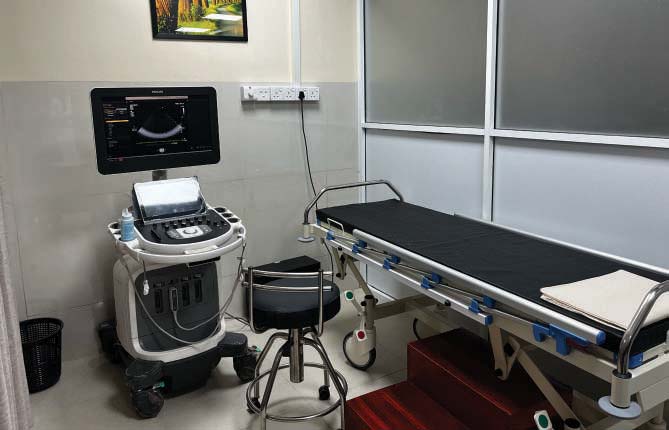
Refurbished cardiology unit at the Apeksha Cancer Hospital
Education and Youth Development
Education remained a key pillar
of SAGT’s community investment
approach. The Company continued to
support students and young people
through programs that enhance
learning opportunities, confidence and
future employability.
School support initiatives included
the provision of sanitary products to
students, helping address practical
barriers to school attendance and
wellbeing. Such assistance contributes
positively to dignity, inclusion and
educational continuity.
SAGT also supported mentorship
and youth development initiatives
designed to guide students and
young professionals in career
planning, leadership development and
confidence building. As a part of that
initiative, SAGT continues to invest in
the development of future generations
by maintaining partnerships with
institutions such as the University of
Moratuwa and the Chartered Institute
of Logistics and Transport (CILT) to
deliver a mentorship program. The
program offers students valuable
insights into soft skills development,
leadership potential, and career
advancement preparation, while
also providing a comprehensive
understanding of terminal operations.
SAGT ensures that each mentorship
cohort is gender-diverse, aiming to
increase female representation and
exposure within the industry.
With gender equality as a strategic
priority, SAGT maintains long-term
partnerships with industry associations
such as the Women’s International
Shipping and Trading Association
(WISTA) and Maritime SheEO. These
collaborations provide a platform
for SAGT to advance the gender
equality agenda within the maritime
and logistics sector, promoting the
entry and professional development of
women in the industry.
By investing in education and youth
capability, the Company helps
strengthen future talent pipelines and
broader socio-economic resilience.
Environmental Responsibility and
Community Clean-up
SAGT recognises that environmental
stewardship is closely connected to
community wellbeing. During the
reporting year, SAGT continued its
strategic partnership with the Marine
Environment Protection Authority of
Sri Lanka (MEPA) to support coastal
ecosystem health. As part of the Clean
Sri Lanka initiative, SAGT contributed
personal protective equipment (PPE)
and cleaning supplies for volunteers
participating in MEPA-led beach
clean-up events. Additionally, SAGT
employees actively took part in the
Company’s annual beach clean-up
campaign conducted in collaboration
with MEPA.
SAGT employees volunteering at beach clean up program held on World Oceans Day 2025
SAGT also supported and participated
in MEPA’s World Oceans Day
Program held at Port City Colombo,
reinforcing its commitment to marine
conservation.
These activities help protect coastal
ecosystems, raise public awareness
and promote shared responsibility
for preserving Sri Lanka’s marine
environment.
Support for Seafarers and Industry
Stakeholders
Through its sustainability department,
SAGT maintains ongoing engagement
with the Mission to Seafarers (MtS)
and collaborates to promote seafarer
wellbeing. In addition, SAGT employees
regularly interact with crews on vessels
docking at the SAGT berth, extending
appreciation for their service on key
commemorative days such as New
Year’s Day and the Day of the Seafarer.
Community-oriented initiatives
benefiting seafarers reflected SAGT’s
recognition of the demanding nature
of life at sea and the importance
of supporting those who enable
international commerce.
This stakeholder-focused approach
extends the Company’s social
responsibility beyond land-based
communities to include the wider
maritime ecosystem.
Responsible Community Partnerships
SAGT seeks to direct community
investment towards areas where
support can deliver meaningful and
measurable benefit. Rather than
isolated donations, the Company
prioritises partnerships and
interventions linked to long-term
wellbeing, education, health and
environmental outcomes.
This approach helps ensure that
resources are used responsibly, and
that social investment remains relevant
to evolving community priorities.
Through continued investment in
healthcare, education, inclusion,
environmental stewardship and
stakeholder wellbeing, SAGT
reaffirmed its commitment to
responsible corporate citizenship
during the year under review. The
Company remains focused on
creating positive and lasting impact
for communities while supporting
sustainable national development
alongside commercial success.