Located in the Port of
Colombo, SAGT is one of
four container terminal
operators contributing
to Sri Lanka’s growing
prominence as a worldclass transshipment hub.
From its inception, SAGT has
recognized the critical importance
of sustaining and enhancing the
competitive advantage derived from
Sri Lanka’s strategic geographical
location, along with its own unique
strengths. Ensuring the well-being
of its people, customers, business
partners, and the environment is not
only integral to SAGT’s sustainability
but also to maintaining the profitability
of the Company’s operations and
Sri Lanka’s competitiveness as a
transshipment hub.
As such, sustainability is embedded in
SAGT’s corporate ethos and business
strategy at the highest level. This is
guided by its robust Sustainability
Management Framework (SMF), which
integrates sustainability objectives
into the core of the Company’s
strategic and long-term goals. The
SMF comprises of a stage-wise
process where impact materiality
assessments are undertaken to
identify the significant actual, potential
negative and positive environmental,
social and governance impacts on
its key stakeholders. The impact
materiality assessment are supported
by the identification of Sustainability
Related Risks and Opportunities
(SRROs) and Climate Related Risks
and Opportunities (CRROs) arising
from the identified impact material
topics. The subsequent stages of
the SMF include the identification
of policies, processes, SOPs and
management approaches to manage
such material topics; establishment of
KPIs to track and monitor sustainability
performance; establishment of targets
for key material topics; undertaking sustainability interventions to
mitigate and manage the identified
material impact topics; and finally in
reporting progress to the Company’s
stakeholders. The policies, procedures
and management approaches are
founded in the Company’s core
organizational values and thus the
policies carry commitments to ensure
operational excellence, providing
exemplary service to its customers,
and developing an integrated value
chain ensuring sound corporate
governance, compliance with all
regulatory requirements and human
rights considerations while also
considering the precautionary
principle in investment and operational
decisions. The commitments are then
embedded across the Company,
by ensuring alignment of Policies,
Management Approaches and
Standard Operating Procedures
(SOPs) at every division and operation
via the Sustainability Management
Framework.
The stages of SAGT’s Sustainability
Management Framework (SMF)
is supported by a Sustainability
Performance Management System
enabling the data capture, analysis
and dashboarding on a quarterly
basis, which in turn supports the
reporting of sustainability performance
to senior management teams for
course corrective decision making.
Internal and external assurance
processes further support SAGT’s
sustainability journey by ensuring
accurate information for decision
making, compliance with laws,
regulations, benchmarking with
best-in-class practices and enabling
continuous improvement. By adhering
to internationally recognized reporting
standards and frameworks such
as the Global Reporting Initiative
(GRI) Standards, the United Nations
Sustainable Development Goals
(SDGs), and the United Nations Global Compact (UNGC), the Company
enhances the management and
transparency of its non-financial
disclosures and its communication of
progress.
Aligned with its business objectives,
SAGT’s Sustainability Commitments
are classified within three core pillars:
Responsible Economic Contribution,
Environmental Stewardship, and Labor
Practices & Social Responsibility.
The determination of SAGT’s
material topics involve obtaining
an understanding of its significant
stakeholder concerns. SAGT defines
its significant stakeholders as
stakeholders who may be impacted
by the Company’s operations, and
those stakeholders who possess the
ability to influence the Company’s
operations. As such, identification of
the significant stakeholder concerns
as well as the identification of internal
stakeholder perceptions and risks of
opportunities play an important role in
the prioritisation of the material topics
of SAGT. This engagement process is
integrated with the Company’s daily
business operations, to derive longterm value for the business and its
stakeholders.
The following section outlines SAGT’s Sustainability Management Framework and demonstrates how
sustainability is
embedded across all levels of the Company’s business operations.
SAGT’S MATERIAL TOPICS
SAGT’s Material Topics are aligned with the four Sustainability pillars:
Environmental
Stewardship
- Materials
- Energy
-
Water and Effluents
Management
-
Emissions
Management
-
Environmental
Complaince
- Supplier Assessments
Corporate Governance
-
Transparency and
Accountability
-
Stakeholder
Engagement
- Code of Conduct
-
Sustainablity
Reporting
Labour Practices &
Social Responsibility
- Employee Engagement
- Training and Development
- Labour Relations
- Diversity, equity and inclusion in our human capital management with a special focus on
women
- Customer privacy
- Socioeconomic compliance
Enabling Work
Environment - focused
on wellbeing, safety,
security and health
- Non-discrimination
- Freedom of Association
- Zero-tolerance towards forced and compulsory labour
- Occupational Health and Safety
- Customer Health and Safety
- Cyber Security
- Robust Emergency Response
SUSTAINABILITY POLICY
SAGT's Sustainability Policy is
anchored in ethical practices and
principles of corporate responsibility.
While complying with all applicable
local and international regulatory
requirements at a minimum, SAGT
sets benchmarks in its operations,
environmental stewardship and social
responsibility. Operational impact is
monitored and assessed while ensuring
transparent communication on key
ESG practices.
SAGT is committed to mitigating
its environmental impact through
energy conservation, decarbonising
terminal operations, managing waste
responsibly, efficient utilisation of
materials, and water and effluent
management ensuring that it complies
with environmental regulations at all
times.
From a social perspective, the
Company is committed to fostering a
safe, secure and non-discriminatory
working environment, focused
on diversity, equity and inclusion
with a specific focus on female
empowerment. As such all employees
are offered equal opportunity
for personal and professional
development, which includes training,
career performance reviews, parental
leave whilst ensuring a zero-tolerance
approach to its employee related
policies and practices including child
labour, forced and compulsory labour
and freedom of association.
All SAGT staff are required to adhere
to the Company’s employee Code
of Conduct, and by complying with
all applicable local and international
labour laws and regulations and
standards including adherence to
minimum wages and the payment
of statutory provisions in relation
to its outsourced manpower. All
SAGT suppliers are registered via the
Company Supplier Portal and are
required to adhere to the Company’s
Supplier Code of Conduct.
SAGT’s process to engage with its
suppliers on specific sustainability
topics and include its supply chain
partners and customers within the
Company’s sustainability drive was
reviewed and revised during the
last year. As part of this process,
the Company continues to identify
significant suppliers and engage them
through sustainability self-assessments,
periodic reviews and supplier audits
where applicable. As a part of the
Company’s continuous improvements,
a new updated process in this regard
was put in place by the Supply Chain
Division, with the reassessing and
identification of significant suppliers
followed by periodic engagement
through self-assessments and audits.
SAGT considers customer health and
safety, cyber security and customer
privacy and emergency response as
key material topics that may have
impact on its customer groups. Whilst
noting that SAGT’s location within the
Port of Colombo creates relatively
lesser opportunity for community
engagements, SAGT nonetheless
carries out numerous projects
aimed at uplifting local communities
contributing towards the development
of livelihoods within the nation as part
of its overall corporate responsibility
efforts.
Key Elements of the SMF:

Identifying Stakeholder concerns
The identification and prioritisation
of key stakeholders and their
concerns is done through an
internal perception materiality
assessment considering primarily
an impact materiality approach. The
Materiality Assessment considers
an impact-based assessment of the
importance placed by stakeholders
on environmental and societal topics
(impact materiality) and considers
the risks to the organisation and
investors arising from dependencies
of environmental and social factors
(financial materiality). SAGT utilises
the methodology outlined in GRI
3: Material Topics to identify its
universe of sustainability impacts.
This process is further supported
by the AA1000AS Standard’s sixpart materiality test to prioritise
the most significant impact topics.
The COSO Risk Management
Framework is then utilised to
assess the risks and opportunities
arising from organizational
impacts and environmental and
social dependencies. and then
classified based on their importance
and impact and the results are
integrated into the Company’s
broader enterprise risk management
processes. SAGT’s materiality
assessment for the reporting year
was aligned in accordance with
the AA1000AS Standard and the
GRI 3 standard on materiality
assessment. While climate change
was identified as a significant risk
for the Company through both
its materiality assessment and its
enterprise risk management process,
and its impacts and mitigation plans
associated with the related physical
and transition risks, were analysed.

Policy and Framework
The Company has established
policies related to environmental,
social and governance factors,
such as its Energy and Emissions
Policy, Water Management Policy,
Health & Safety Policy and AntiCorruption Policy. These policies
are complemented by management
procedures and Standard Operating
Procedures (SOP). Further, the
policies and policy framework
undergo regular reviews by the
Senior Management Team. The Policy
Framework of SAGT is designed to
address the prioritised impacts, risks
and opportunities derived through its
materiality assessment.

Data Tracking & Analysis
Data Tracking & Analysis: The
Company measures, monitors, and
tracks the progress of its chosen
sustainability indicators using a
Sustainability Performance Tracking
Tool - the Sustainability Performance
Analyser introduced in 2019. This tool
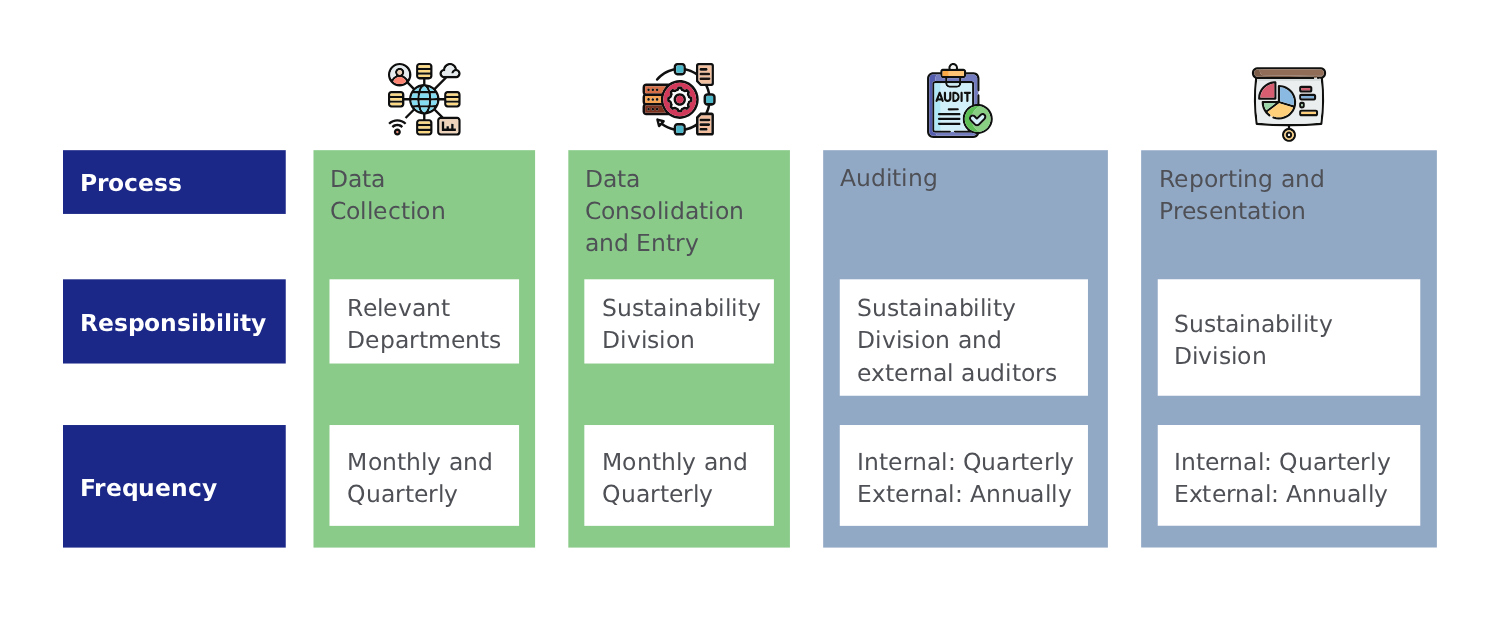
enables the collection, consolidation
and analysis of information
pertaining to the Key Sustainability
Performance Indicators (KSPI),
by the Sustainability team, on a
quarterly basis. Since 2021, SAGT
has been compiling data monthly,
to further strengthen management
intervention and be able to deliver
speedier responses. The KSPI’s cover
a range of performance metrics
aligned with relevant disclosures
within the Global Reporting Initiative
(GRI) standards, which are crucial
for assessing sustainability across
material topics. These indicators
ensure that the Company adheres
to internationally recognized
sustainability guidelines. These KSPI’s
are shared with the Management
Committee, monthly for review,
investment and action as necessary.

Benchmarking and Variance Control
In addition to monitoring its
performance against internal
goals and targets, SAGT actively
benchmarks against industry best
practices, recognized standards
and performance of key peers. This
commitment enables the Company
to continuously measure its progress
within the broader industry context
and adopt leading-edge approaches
and position itself as a proactive
influencer and a catalyst for change
within the sustainability landscape of
the industry.

Sustainability Initiatives
SAGT engages in a range of
initiatives which are carried out at
organisational and departmental
levels. At the organisation level,
SAGT tackles significant global
challenges such as climate change
through comprehensive initiatives
aimed at reducing its environmental
impact and promoting sustainable
practices across all operations.
Simultaneously, economic and
social sustainability goals, such
as driving cost rationalisation,
enhancing operational efficiency,
and strengthening stakeholder
engagement are championed by
individual departments.

Sustainability Reporting and External Assurance
SAGT produces a thorough
sustainability report, aligned with key
global standards including the Global
Reporting Initiative (GRI) standards,
the United Nations Global Compact
(UNGC) principles, and the United
Nations Sustainable Development
Goals (SDGs). This comprehensive
approach ensures transparency
and reinforces its commitment to
responsible environmental, social,
and governance practices. SAGT
ensures that all annual Sustainability
Reports are subject to independent
external assurance to enhance the
credibility and reliability of the
reported.
RESPONSIBILITY FOR DRIVING
SUSTAINABILITY AT SAGT:
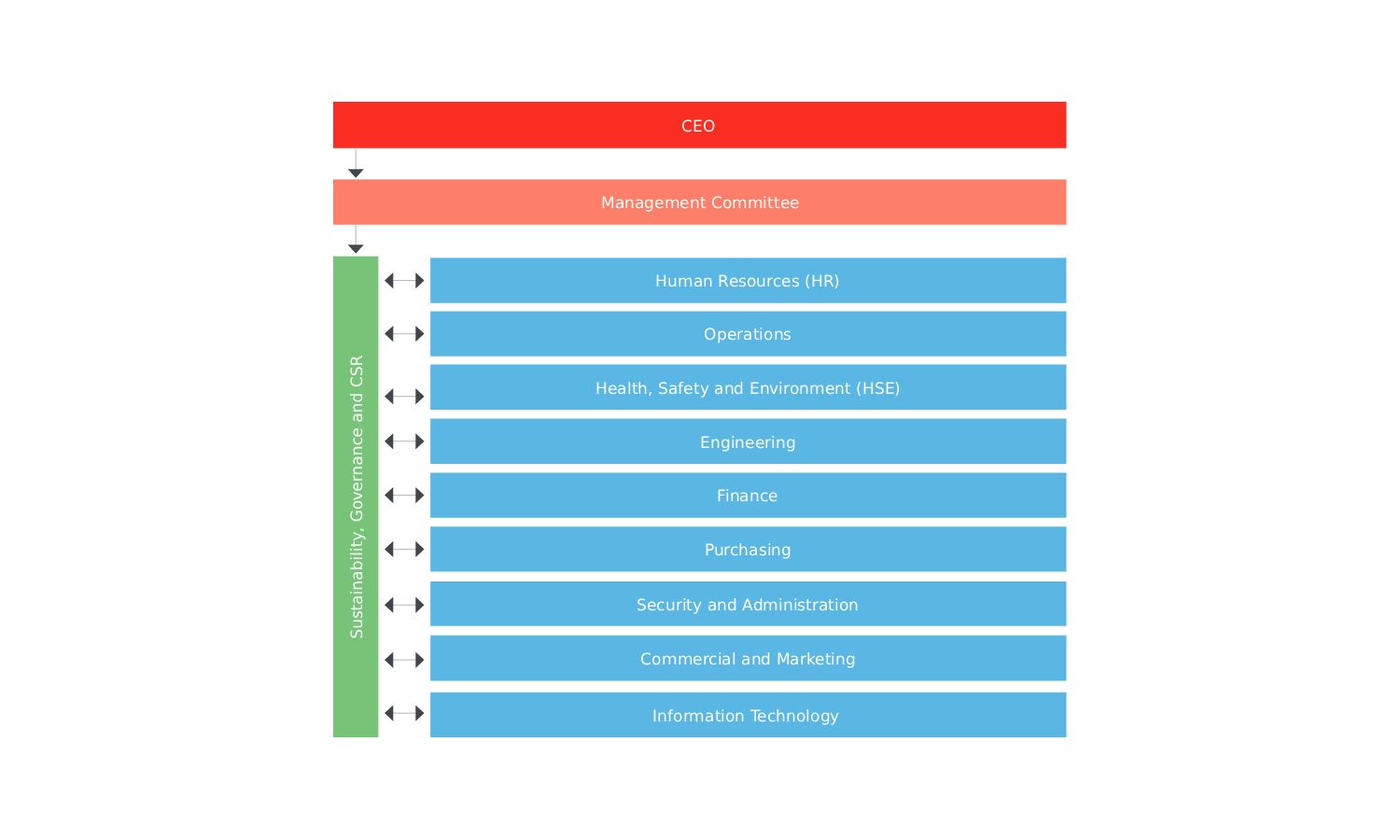
The organisational structure for
sustainability, outlined below,
supports the effective execution of
SAGT’s sustainability agenda and
the achievement of its sustainability
goals. It ensures that performance
related to key material topics is
regularly assessed and managed by
the Senior Management Team (SMT).
The CEO, through the Management
Committee, holds responsibility for
ensuring the implementation of SAGT’s
Sustainability Management Framework
(SMF).
THE SUSTAINABILITY DIVISION
The Sustainability Division is responsible
for overseeing the implementation
of the Sustainability Management
Framework (SMF) and executing its
strategies through the following key
roles and responsibilities.
-
Collaborating with the nine
Departments to ensure the timely
capture of all Environmental, Social,
and Governance (ESG) data, and
managing the input of quarterly and
monthly sustainability data through
the Sustainability Performance
Analyzer.
-
Compiling the internal sustainability
report for the CEO and Management
Committee's review of the year's
sustainability performance.
-
Providing input to the CEO and
Management Committee on
sustainability impacts associated
with new projects, to ensure that
sustainability-related risks including
climate change risks are mitigated
and environmentally responsible
principles and practices are
incorporated at the planning stage.
-
Facilitating the annual external
assurance process and the periodic
internal assurance audits to verify the
completeness and accuracy of data
as well as the adherence to relevant
Standard Operating Procedures
(SOP’s).
-
Conducting research on industry best
practices, performing benchmarking
studies, and identifying gaps to set
ambitious sustainability goals and
targets for the Company.
-
Identifying sustainability risks that
may arise internally or along the
value-chain and working with relevant
departments to help suppliers
mitigate their risks.
-
Engaging with and sharing
sustainability knowledge with
suppliers to enhance their
sustainability performance, fostering a
culture of continuous improvement.
-
Identifying new initiatives, process
improvements and opportunities for
cost savings in collaboration with the
nine Departments to ensure effective
implementation of these strategies.
-
Raising awareness and sharing
knowledge on Sustainability, best
practices and emerging trends
on sustainability through regular
internal and external campaigns and
engaging employees in sustainability
initiatives.
-
Compiling and delivering the Annual
Sustainability Report, showcasing
the Company's sustainability
performance and progress towards
goals.
Sustainability at Department level
A Sustainability Champion within each
of the nine Departments is tasked with
implementing the Company’s SMF
based on the identified material topics
and selected frameworks. Through the
efforts of each designated Sustainability
Champion, the Departments are
responsible for:
-
Recording and monitoring
sustainability data as per the SOP, in a
timely and accurate manner.
-
Maintaining source documents
to enable internal sustainability
assurance.
-
Collaborating with the Sustainability
Team to implement sustainability
initiatives and process improvements
relevant to each Department.
-
Finding ways to enhance
sustainability performance across the
value chain, by sharing knowledge
and best practices in sustainability.
Sustainability Reporting
SAGT follows a robust reporting
process that includes both external
and internal reporting cycles to
ensure transparency and effective
management of sustainability
performance.
External Reporting
The annual Sustainability Report serves as the Company’s primary tool for
communicating its sustainability performance to its external stakeholders in
accordance with the Global Reporting Initiative (GRI) Standards, and also as
its Communication of Progress towards the United Nations Global Compact
(UNGC).
Internal Reporting Process
SAGT’s internal reporting consists of a quarterly report, with select indicators extended to a monthly
cycle. These
indicators track operational efficiency, compliance, and key sustainability areas, providing relevant
management
information to support informed decision-making and a more comprehensive approach to capital budgeting.
DEFINING REPORT CONTENT
This report details SAGT's sustainability
strategy, corporate governance
framework, risk management process,
environmental and social responsibility
efforts, and discloses the measures
taken by SAGT to achieve an improved
holistic sustainability performance.
While ensuring compliance as per
all regulatory requirements at a
minimum, SAGT’s operations are
guided by the ‘Precautionary Principle’
resulting in responsible investment
and operational decisions. This policy
commitment ensures minimal impact
on natural resources, the environment
and reduces the Company’s carbon
footprint while minimizing its effect
towards climate change. SAGT’s
Sustainability policy also commits
towards ensuring the protection of
human rights in its operations and its
value chain as far as practicable, whilst
also committing to ensuring a safe and
productive work environment for all
staff.
All methodologies, assumptions,
indicators and estimations used in the
compilation of this report follow the
GRI standards and industry practices.
Any restatements, along with
underlying reasons, are clearly stated
in the relevant sections of this report.
All data included in SAGT’s
sustainability reports over the last six
years have been validated internally
through senior management review
as well as externally, through an
independent third-party assurance
provider.
Stakeholder Engagement and
Identification of Material Topics
As expectations continue to evolve
among customers, regulators,
investors, lenders and communities
etc, SAGT remains committed
to strengthening its economic,
environmental and social response in
line with global best practice and local
priorities.
The identification of key stakeholders
is driven by insights gathered through
discussions with key business units
and operational departments. Once
identified, significant stakeholder
groups are identified based on
their potential impact and influence
on the Company, and the impact
of the Company’s operations on
stakeholders. The impact-influence
matrix for broader stakeholder groups
forms the foundation for developing
an effective engagement strategy,
including determining the basis for
engagement, setting the preferred
frequency of interaction, and assigning
responsibilities for engagement
activities.
SAGT maintains an ongoing
and comprehensive stakeholder
engagement process, seamlessly
integrated into its daily operations.
This continuous approach ensures
that the Company remains responsive
to stakeholder concerns in real time,
allowing for proactive and effective
responses. Dialogue with stakeholders
provides the foundation for identifying
and prioritizing issues based on their
significance to both the Company and
external stakeholders. These issues
are then mapped according to their
potential impact on the Company and
stakeholders.
SAGT has identified the following key stakeholders

SAGT continues to engage with all
significant stakeholders mentioned
above, that can impact, and that are
impacted by the Company’s business
operations. Multiple mechanisms are
put in place to allow stakeholders to
voice grievances and highlight potential
concerns arising from terminal activities.
Close relations are maintained with
Government Regulatory & Statutory
bodies such as Central Environmental
Authority (CEA), Marine Pollution
Prevention Authority (MPPA) and
the Marine Environmental Protection
Authority (MEPA) to ensure that the
Company at a minimum complies with
regulatory requirements.
SAGT also partners with environmental
conservation subject experts such as
the Centre for Sustainability of the
University of Sri Jayewardenepura to
execute reforestation and conservation
initiatives.
Similarly, employee feedback on related
issues is actively encouraged through
various channels, including trade unions,
the organisational hierarchy, surveys
and interviews, suggestion boxes, and
intranet.
Robust data systems are central to
effective environmental stewardship.
SAGT continuously monitors resource
consumption and environmental
indicators through a combination of
digital systems, equipment records,
meter readings and operational data
capture processes to identify potential
areas of grievance prior to occurrence.
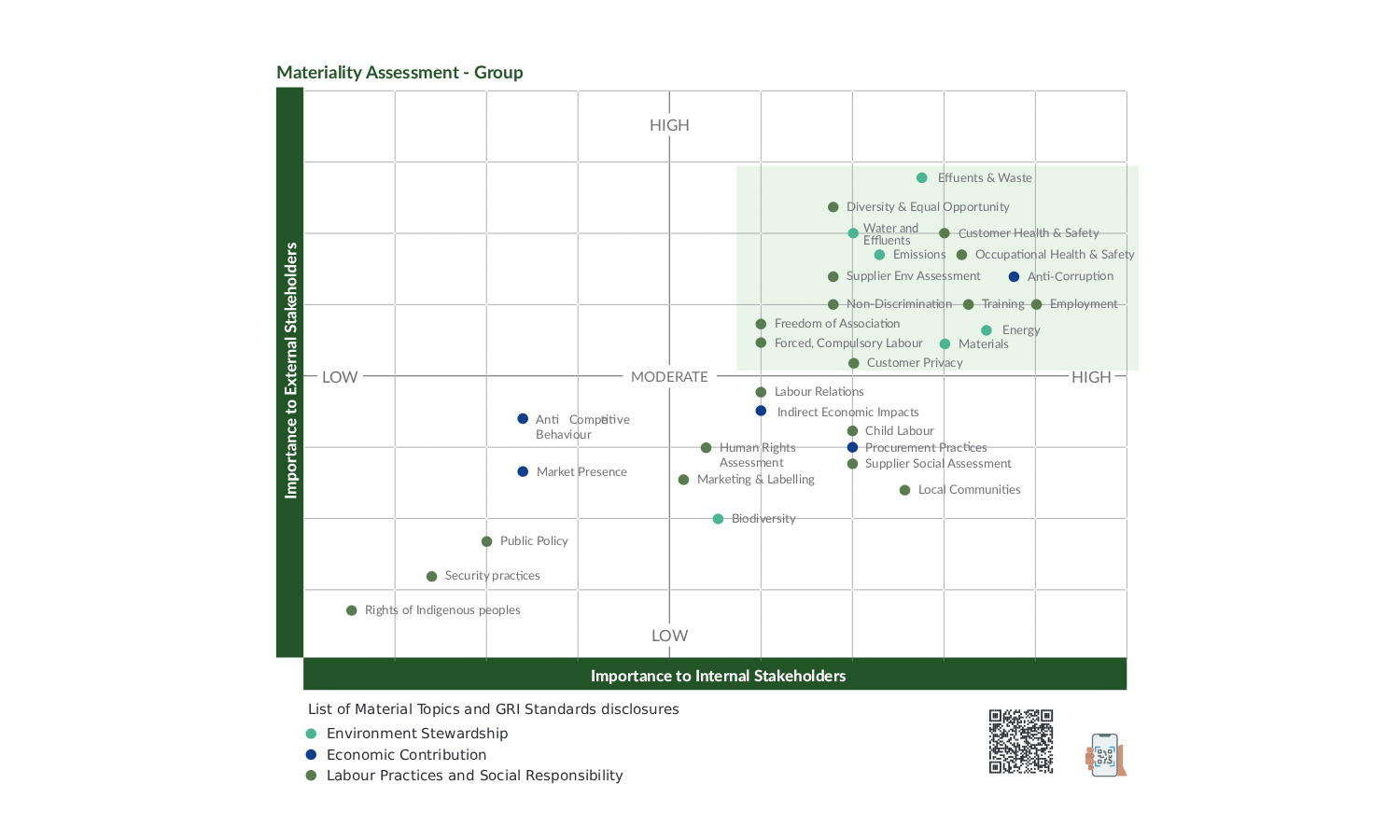
Materiality Assessment Process
A Materiality Assessment is conducted
periodically to identify the organizational
impacts on the Company’s significant
stakeholders, and the sustainability
related risks and opportunities faced
by the Company. These organizational
impacts along with the sustainability
related risks and opportunities are
considered as material topics that may
have a actual or potential positive or
negative effect on such significant
stakeholders. Its assessment process
follows the methodology outlined in
the GRI 3 Standard augmented by
the AA1000AS Standards Version
3 Guidance Document and seeks to
identify the importance of a topic
on internal stakeholders and the
importance of a topic on its external
stakeholders.
SAGT has also sought to identify
key Sustainability Related Risks and
Opportunities (SRROs) along with
sustainability impact topics mentioned
above.
These SRROs were identified by
assessing the risks arising from the
identified organizational impacts
and assessing them based on the
likelihood of occurrence and impact
severity to the Company and Investors
based on the COSO Risk Management
Framework to determine an overall
risk rating. This risk rating, along with
the importance to internal and external
stakeholders described above, serves
as the foundation for prioritising
material topics, which are then used to
identify Key Sustainability Performance
Indicators and relevant GRI disclosures
reported in the GRI Content Index of this
report.
As a result of this process, SAGT has
prioritized 16 material topics and
selected 44 GRI Standard topic-specific
disclosures for both internal and external
reporting, which are summarized
in the table below. This section also
outlines the strategies and management
approaches implemented to address
SAGT’s material topics.
MANAGEMENT OF MATERIAL TOPICS
The following section summarizes SAGT’s disclosure management approach (DMA) for Economic contribution,
Environmental Stewardship and Labour Practices and Social Responsibility. The DMA can be viewed online at
https://d3bo42cmohq4cn.cloudfront.net/2021/12/SAGT-DMA-Report-latest-3.pdf.
| No: |
GRI Standard Topics/ General Disclosures |
Topic Specific Disclosures |
| 1 |
GRI 205: Anti-Corruption |
205-1: Operations assessed for risks related to corruption
205-2: Communication and training about anti-corruption policies and procedures
205-3: Confirmed incidents of corruption and actions taken
|
| 2 |
GRI 301: Materials |
301-1: Materials used by weight or volume |
| 3 |
GRI 302: Energy |
302-1: Energy consumption within the organisation
302-3: Energy intensity
302-4: Reduction of energy consumption
|
| 4 |
GRI 303: Water and Effluents |
303-1: Interactions with water as a shared resource
303-2: Management of water discharge-related impacts
303-3: Water withdrawal
303-4: Water discharge
303-5: Water consumption
|
| 5 |
GRI 305: Emissions |
305-1: Direct (Scope 1) GHG emissions
305-2: Energy indirect (Scope 2) GHG emissions
305-3: Other indirect (Scope 3) GHG emissions
305-4: GHG emissions intensity
305-5: Reduction of GHG emissions
305-6: Emissions of ozone-depleting substances (ODS)
|
| 6 |
GRI 306: Waste |
306-1: Waste generation and significant waste-related impacts
306-2: Management of significant waste-related impacts
306-3: Waste generated
306-4: Waste diverted from disposal
306-5: Waste directed to disposal
|
| 7 |
GRI 308: Supplier Environmental Assessment |
308-1: New suppliers that were screened using environmental criteria |
| 8 |
GRI 401: Employment |
401-1: New employee hires and employee turnover
401-2: Benefits provided to full-time employees that are not provided to temporary or
part-time employees
401-3: Parental leave
|
| 9 |
GRI 403: Occupational Health & Safety |
403-1 Occupational health and safety management system
403-2 Hazard identification, risk assessment, and incident investigation
403-3 Occupational health services
403-4 Worker participation, consultation, and communication on occupational health and
safety
403-5 Worker training on occupational health and safety
403-6 Promotion of worker health
403-7 Prevention and mitigation of occupational health and safety impacts directly linked by
business relationships
403-8 Workers covered by an occupational health and safety management system
403-9 Work-related injuries
|
| 10 |
GRI 404: Training |
404-1 Average hours of training per year per employee |
| 11 |
GRI 405: Diversity & Equal Opportunity |
405-1: Diversity of governance bodies and employees |
| 12 |
GRI 406: Non-Discrimination |
406-1: Incidents of discrimination and corrective actions taken |
| 13 |
GRI 407: Freedom of Association |
407-1: Operations and suppliers in which the right to freedom of association and collective
bargaining may be at risk |
| 14 |
GRI 409: Forced, Compulsory Labour |
409-1: Operations and suppliers at significant risk for incidents of forced or compulsory
labour |
| 15 |
GRI 416: Customer Health & Safety |
416-2: Incidents of non-compliance concerning the health and safety impacts of products and
services |
| 16 |
GRI 418: Customer Privacy |
418-1: Substantiated complaints concerning breaches of customer privacy and losses of
customer data |
RESPONSIBLE ECONOMIC CONTRIBUTION
SAGT strives to be a benchmark for sustainability within the industry and the region, the Company
conducts all its
business activities in a responsible manner, ensuring they remain in line with the highest standards of
ethics and integrity
at all times.
SAGT remains committed towards delivering sustainable performance and growth across all its stakeholder
groups, while
ensuring compliance with relevant anti-corruption legislation, reinforced by its anti-corruption policy
that serves as the
overarching ethos for its activities.
The Company ensures that all concerns raised with respect to legal and ethical violations are addressed
in an impartial
manner through a strongly enforced whistleblowing policy that is outlined within the Code of Conduct for
employees
and overseen by an independent Ombudsperson.
A comprehensive disclosure of SAGT’s Corporate Governance framework and practices can be found on pages
18-22 of
this report.
ENVIRONMENT STEWARDSHIP
During the reporting year, SAGT focused on decarbonization and digitization to minimize its carbon footprint
and improve
operational efficiencies. The Company also ensures its operations conform to the environmental regulations
stipulated by
the Central Environmental Authority and the Marine Pollution Prevention Authority.
SAGT recognises that its consumption of non-renewable fossil fuels is responsible for air pollutants and
greenhouse gas
(GHG) emissions and considers this to be its most significant environmental impact. The GHG emissions
resulting from
SAGT’s terminal operations are primarily attributable to its trucking and machinery operations. SAGT's
strategy of energy
conservation and hybridization of its RTG fleet and the electrifying of its fleet of Prime Movers is further
described in the
section environmental stewardship. Additionally, the Company considers water consumption, the generation of
hazardous
and non-hazardous waste and the segregation and treatment of effluents to be material to its operations.
Therefore, the
Company has established the following policies to mitigate and minimise the impact.

Energy & Emissions Policy
To adopt green practices, engage
in new investments, deploy
energy efficient equipment and
initiate behavioural changes
designed to minimise the
Company’s overall energy and
carbon footprint. Ensuring that
impacts of climate change
are addressed and mitigated
through business continuity
plans, disaster recovery plans and
relevant insurance covers that
offer protection against business
interruption and worker health
and safety.

Water Management Policy
To reduce the use and withdrawal
of blue water sources and
minimise the water discharged
to the environment through
recycling and reusing initiatives
where possible, while ensuring
that the quality of water
discharged is in alignment
with Sri Lankan legislation and
regulations.

Waste Management Policy
To ensure that all regulatory
requirements are adhered to
in terms of the disposal of
hazardous and non-hazardous
waste, ensuring segregation
discipline is entrenched within
SAGT’s operations, while
promoting waste reduction
and engaging in the reuse and
recycling of generated waste
through accredited third-party
waste disposal contractors.
LABOUR PRACTICES AND SOCIAL RESPONSIBILITY
Being a labour-intensive industry, the
Company’s employees and workforce
remain at the core of SAGT’s business
success. In 2024, the Company
focussed on diversity, equality and
inclusion with a specific focus on
women, implementing a dynamic
policy on paternity leave which
enables and empowers mothers to
return to work while giving fathers the
opportunity to be more involved with
their newborn.
SAGT prioritises fostering a conducive
work environment within which
employees are offered opportunities
to grow and thrive, with equal
opportunities for recruitment, selection
and progress regardless of race,
gender, nationality, religion, or any
other status protected by law. A safe
and secure working environment that
is wholly focused on safeguarding
the human rights of its workforce
is available within the Company,
while every employee can earn a
fair, equitable income, while driving
skill development to ensure career
advancement in their field of choice.
All employment-related legislation
is adhered to, while SAGT seeks to
continuously improve and develop
upon these recruitment and selection
practices by integrating new ideas and
approaches to achieve industry and
global best practices.
SAGT’s training and development
programmes empower employees
through the development of individual
technical and soft skills that aid in
the achievement of individual and
organisational objectives.
The organisation’s inclusive approach
is underscored by SAGT’s key
priority to provide a safe and secure
environment free from discrimination
and any form of harassment. To this
effect, the Company maintains a
zero-tolerance policy for any form of
sexual harassment in the workplace,
with all allegations in this regard treated in the utmost confidence and
with respect. The Company has all the
necessary measures in place to ensure
no individual will be victimised for
lodging a complaint of this nature. All
complaints are promptly investigated
and addressed in accordance with
the processes detailed within the
Company’s policy against sexual
harassment. Any person deemed
guilty is subject to disciplinary action,
with implications ranging up to and
including dismissal from employment.
Additionally, no employee is forced
to work against their will and is not
required to engage in bonded/forced
labour, nor are they subject to corporal
punishment or coercion of any kind
within the workplace.
Internally developed SOPs, guidelines,
procedures and precautionary
measures ensure that SAGT can
uphold the health and safety of its
stakeholders, including employees,
subcontractors, clients, customers, and
agents, in addition to the shipping lines
that access its terminal premises.
These procedures and measures are
built on the premise of proactive risk
management, continuous quality
improvement and contingency
planning, thereby ensuring operations
at the terminal are conducted in
accordance with the highest safety
standards to minimise avoidable
injuries and mitigate the risk of
occupational illnesses.
All employees are required to adhere
to these SOPs without exception, and
all third parties visiting the terminal
must adhere to the Company’s health
and safety policy.
SAGT is committed to projects aimed
at uplifting local communities through
dedicated programmes that promote
gender equality and the empowerment
of women, while engaging in
partnerships with a range of local and international non- government
organisations (NGOs) and government
organisations, and sponsorships of
academic projects, further supported
by voluntary employee initiatives.
Performance Monitoring of Material
Topics
SAGT utilises its comprehensive
Sustainability Management
Framework (SMF) augmented by
a spreadsheet based software tool,
the Sustainability Performance
Analyser (SPA), to facilitate data
collection, enhance trend visibility
and support internal and external
reporting of all its material economic
and governance, environmental and
social topics through Key Sustainability
Performance Indicators (KSPIs) which
is a critical aspect of SMF.
The SPA provides SAGT the ability to
specifically gather the KSPI related
data for the above-mentioned
material topics, undertake automated
calculations, assess logical validation
of data input and provide dashboards
for internal and external reporting
and management review, whilst also
enabling data verification and internal
and external assurance.
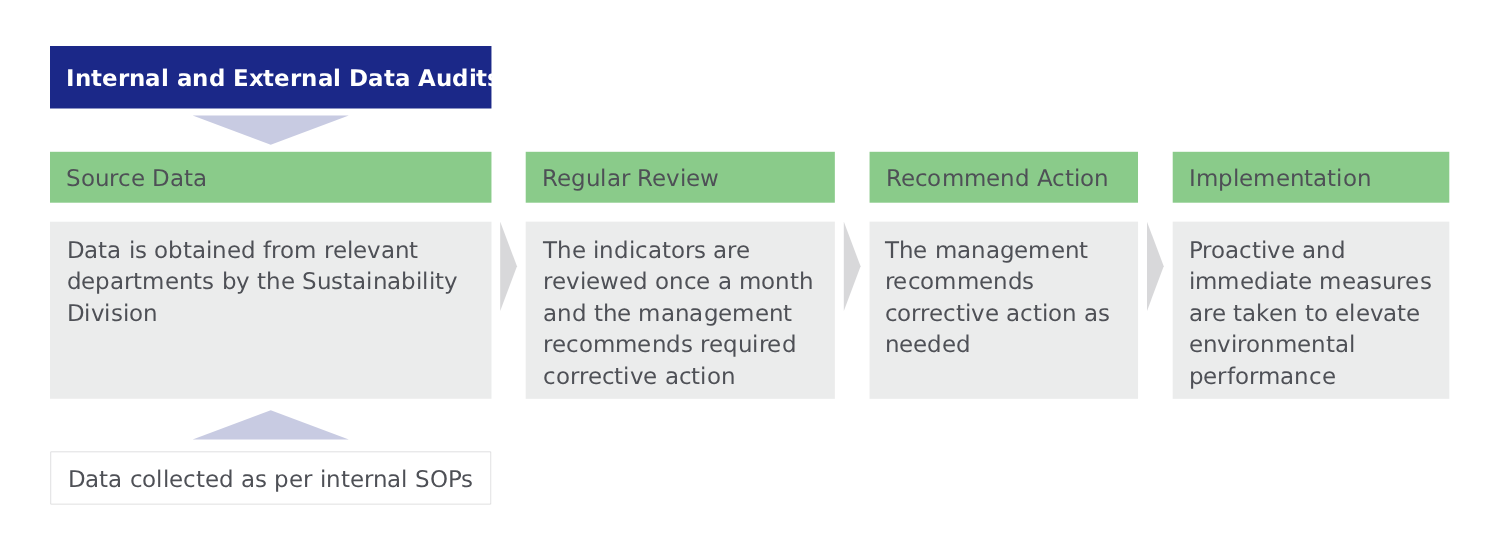
Management reviews all sustainability
performance through regular internal
reporting mechanisms, supported
by monthly monitoring of its KSPIs.
Tracking performance data at frequent
intervals enables SAGT to identify
trends early, respond to emerging
issues promptly and prioritise
improvement opportunities. It also
supports evidence-based decisionmaking and strengthens internal
ownership of environmental outcomes
across departments.
All sustainability related data is
collected in adherence to a Standard
Operating Procedure (SOP) to
maintain precision and accuracy.

Mangrove restoration project at Ittapana mangrove complex
SAGT'S COMMITMENT TO THE SDGS
As a firm advocate of sustainability across all aspects of its operations, SAGT contributes
towards the Sustainable Development Goals (SDGs) approved by the UN in 2015. These
SDGs were designed as a roadmap to build a better and more sustainable future by 2030,
by addressing the world's most pressing economic, social and environmental issues. SAGT’s
alignment to the SDGs can be seen throughout the report through the placement of SDG
icons at relevant points in the content and through the SDG mapping included within the
GRI Content Index found on pages 80-84.